Donald Trump Warns of “Fraudsters” Amid US–Iran Ceasefire Talks, Says Real Negotiations Happening Behind Closed Doors Donald Trump warns of fraudsters spreading misinformation about US–Iran ceasefire negotiations on Truth Social, says real diplomatic talks are happening privately and only official negotiation points are being considered by the United States. April 08, 2026 | 10:53 PM IST ➥ Donald Trump Warns of “Fraudsters” Amid US–Iran Ceasefire Talks Donald Trump has stirred fresh debate online after posting a strongly worded message on Truth Social regarding the ongoing United States–Iran ceasefire negotiations. In his post, Trump warned that several unauthorized individuals are spreading misleading information about the talks and claimed that only one official set of negotiation points is being considered by the United States. Trump stated that “numerous agreements, lists, and letters” circulating online have nothing to do with the real US–Iran negotiations, calling those behind them “fraudsters and charlatans.” According to him, these individuals are attempting to influence public perception by presenting unofficial documents as legitimate parts of the diplomatic process. The former president emphasized that a federal investigation is underway to identify the sources of these misleading claims. He suggested that once the investigation is completed, the individuals responsible for spreading false information about the negotiations will be publicly exposed. Trump also made it clear that the United States has agreed to a ceasefire with Iran only on the basis of specific and meaningful negotiation points that are currently being discussed privately. He explained that these discussions are taking place “behind closed doors,” implying that official negotiations remain confidential and tightly controlled by authorized representatives from both sides. In the same message, Trump criticized the coverage of the talks by CNN, accusing the network of promoting what he described as “fake news.” He specifically referenced a report that cited an unnamed source who allegedly had no real authority to issue statements about the negotiations. According to Trump, the report created confusion by presenting unofficial information as credible diplomatic progress. The post quickly gained attention across social media platforms, fueling discussions about transparency in international negotiations and the role of media reporting in shaping public understanding of global conflicts. Supporters of Trump argue that unauthorized leaks can undermine delicate diplomatic efforts, while critics say public accountability remains important during major geopolitical decisions. The message also comes at a time when global attention is focused on the fragile ceasefire between the United States and Iran, a development that could have major implications for Middle East stability and global energy markets. With tensions still high, any statement from key political figures involved in the negotiations is closely watched by analysts, journalists, and international observers. As negotiations continue, Trump’s statement highlights the growing battle over information and narrative control surrounding the ceasefire talks. Whether the investigation he mentioned will reveal significant misinformation remains unclear, but the controversy shows how sensitive and politically charged the diplomatic process remains. US-Iran Agree to Conditional Two-Week Ceasefire as Strait of Hormuz Reopens, Easing Global Tensions 08 Apr 2026 Trump 50 percent tariffs iran weapons, Escalating Global Trade and Security Tensions 08 Apr 2026 Oil Surges Past $100 as Markets Brace for Global Recession 04 Apr 2026 Technology Race Between Global Powers Accelerates 03 Apr 2026 Defense Budgets Rise Worldwide Amid Security Concerns 03 Apr 2026
US-Iran Agree to Conditional Two-Week Ceasefire as Strait of Hormuz Reopens, Easing Global Tensions
US-Iran Agree to Conditional Two-Week Ceasefire as Strait of Hormuz Reopens, Easing Global Tensions The United States and Iran agree to a conditional two-week ceasefire, reopening the Strait of Hormuz and easing global tensions, offering temporary relief to energy markets while diplomatic negotiations continue. April 08, 2026 | 09:30 PM IST ➥ US-Iran Agree to Conditional Two-Week Ceasefire After weeks of rising tensions and fears of a wider Middle East conflict, the United States and Iran have agreed to a conditional two-week ceasefire that temporarily halts military operations and allows the reopening of the strategic Strait of Hormuz. The announcement came after intense diplomatic efforts and last-minute negotiations aimed at preventing a major escalation that could have destabilized global energy markets and international security. The ceasefire deal was announced after the United States signaled it would suspend planned attacks on Iran if Tehran ensured the complete and safe reopening of the Strait of Hormuz, one of the world’s most critical shipping lanes for oil and energy supplies. Iran responded by saying it would allow safe maritime passage through the strait for two weeks, provided that attacks against the country are halted during that period. This temporary truce has been described as a “double-sided ceasefire,” meaning both countries will pause offensive and defensive military actions while negotiations continue toward a broader peace agreement. Officials from both sides have suggested that many key points of contention have already been addressed and that the two-week window will be used to finalize a long-term diplomatic framework. The Strait of Hormuz sits at the heart of the global energy supply chain, with roughly a fifth of the world’s oil shipments passing through the narrow waterway every day. Any disruption to shipping in the strait has immediate consequences for global oil prices, shipping costs, and economic stability. When tensions between the US and Iran escalated earlier this year, several shipping companies reduced operations in the region, causing concerns across international markets. The ceasefire has therefore been welcomed by governments and financial markets around the world. European leaders described the development as a crucial step away from the brink of war and emphasized that diplomatic engagement must continue to prevent another escalation in the Middle East. At the same time, experts warn that the agreement remains fragile and that long-term stability will depend on whether negotiations during the two-week period lead to a comprehensive peace arrangement. Despite the optimistic tone surrounding the announcement, analysts remain cautious about the real impact of the ceasefire. Some shipping companies have indicated that they will continue to monitor the security situation before fully resuming operations through the Strait of Hormuz, as the region still faces geopolitical risks and uncertainty. The temporary nature of the agreement means that even a small incident could quickly escalate tensions again. For now, however, the ceasefire has provided a rare moment of relief in a region that has been on edge for weeks. If negotiations succeed during this brief pause, the agreement could open the door to a broader peace deal that stabilizes the Middle East and secures one of the world’s most vital energy routes. The coming days will be critical in determining whether this temporary truce becomes the foundation for lasting diplomacy or simply a short break in an ongoing geopolitical rivalry. Trump 50 percent tariffs iran weapons, Escalating Global Trade and Security Tensions 08 Apr 2026 Oil Surges Past $100 as Markets Brace for Global Recession 04 Apr 2026 Technology Race Between Global Powers Accelerates 03 Apr 2026 Defense Budgets Rise Worldwide Amid Security Concerns 03 Apr 2026 Global Trade Faces New Risks as Conflicts Disrupt Supply Chains 03 Apr 2026
Trump 50 percent tariffs iran weapons, Escalating Global Trade and Security Tensions
Trump 50 percent tariffs iran weapons, Escalating Global Trade and Security Tensions US President Donald Trump announced a 50% tariff on countries supplying weapons to Iran, escalating geopolitical tensions and signaling Washington’s tougher stance on global security and international arms support. April 8, 2026 | 8:23 PM IST ➥ Image of US-PERSIDENT-Donald Trump In a dramatic policy announcement that could reshape global trade and security dynamics, U.S. President Donald Trump declared that any nation supplying military weapons to Iran will face an immediate 50 percent tariff from the United States, without exceptions or waivers. The statement, delivered through Trump’s social media account on Wednesday, signaled a hardline approach toward Iran and its potential military partners. The announcement instantly triggered debates among policymakers, analysts, and global trade observers about its geopolitical implications. According to Trump, the new tariff measure is intended to deter countries from supporting Iran’s military capabilities. The U.S. administration believes that restricting economic access to American markets could discourage arms transfers and limit Iran’s ability to expand its defense infrastructure. The move comes amid growing concerns in Washington about Iran’s regional influence and military activities. U.S. officials argue that advanced weapons supplied by foreign nations could strengthen Iran’s strategic position in the Middle East and potentially destabilize already fragile regional security dynamics. Economic experts warn that imposing such steep tariffs could have wide-ranging effects on international trade relationships. Countries with defense ties to Iran may face difficult decisions between maintaining those partnerships or protecting their economic access to the massive U.S. consumer market. Global markets reacted cautiously after the announcement, with analysts predicting that the policy could trigger retaliatory trade measures or diplomatic tensions. The decision may also complicate ongoing negotiations between major powers attempting to stabilize geopolitical rivalries across several regions. Diplomats and foreign policy experts believe the announcement reflects Washington’s broader strategy of using economic pressure to influence international security behavior. Tariffs have increasingly become tools not only of trade policy but also of geopolitical signaling and strategic deterrence. Critics argue that unilateral tariff threats could strain relations with allies if their defense industries are affected. Some experts also question how the United States will verify which countries are supplying military equipment to Iran and how enforcement mechanisms would work. Supporters of the policy, however, say strong economic penalties are necessary to counter what they view as Iran’s expanding military influence. They argue that decisive action sends a clear message that supporting Tehran’s military programs could carry significant financial consequences. As global leaders assess the potential impact of this policy, the announcement has already intensified debates about economic warfare, strategic alliances, and the future of international security cooperation in an increasingly tense geopolitical environment. US-Iran Agree to Conditional Two-Week Ceasefire as Strait of Hormuz Reopens, Easing Global Tensions 08 Apr 2026 Trump 50 percent tariffs iran weapons, Escalating Global Trade and Security Tensions 08 Apr 2026 Oil Surges Past $100 as Markets Brace for Global Recession 04 Apr 2026 Technology Race Between Global Powers Accelerates 03 Apr 2026 Defense Budgets Rise Worldwide Amid Security Concerns 03 Apr 2026
Oil Surges Past $100 as Markets Brace for Global Recession
Trump to detail rescue mission as Iran rebuffs U.S. war demands Space is becoming the next frontier of geopolitical competition. Nations are investing heavily in satellite networks, lunar missions, and space-based technologies. April 2, 2026 | 10:00 PM IST ➥ Top 20 Global Affairs Short News (Ultra-Viral CTR Titles) The Justice Department has concluded that a federal law requiring the preservation of presidential records is unconstitutional, which could effectively permit White House lawyers to try to set their own voluntary The Justice Department has concluded that a federal law requiring the preservation of presidential records is unconstitutional, which could effectively permit White House lawyers to try to set their own voluntary Space is becoming the next frontier of geopolitical competition. Nations are investing heavily in satellite networks, lunar missions, and space-based technologies. Experts say control over space infrastructure could play a major role in communication, defense, and global power dynamics in the future. Oil Surges Past $100 as Markets Brace for Global Recession 04 Apr 2026 Technology Race Between Global Powers Accelerates 03 Apr 2026 Defense Budgets Rise Worldwide Amid Security Concerns 03 Apr 2026 Global Trade Faces New Risks as Conflicts Disrupt Supply Chains 03 Apr 2026 Power Shift in Asia: Strategic Rivalries Intensify 03 Apr 2026
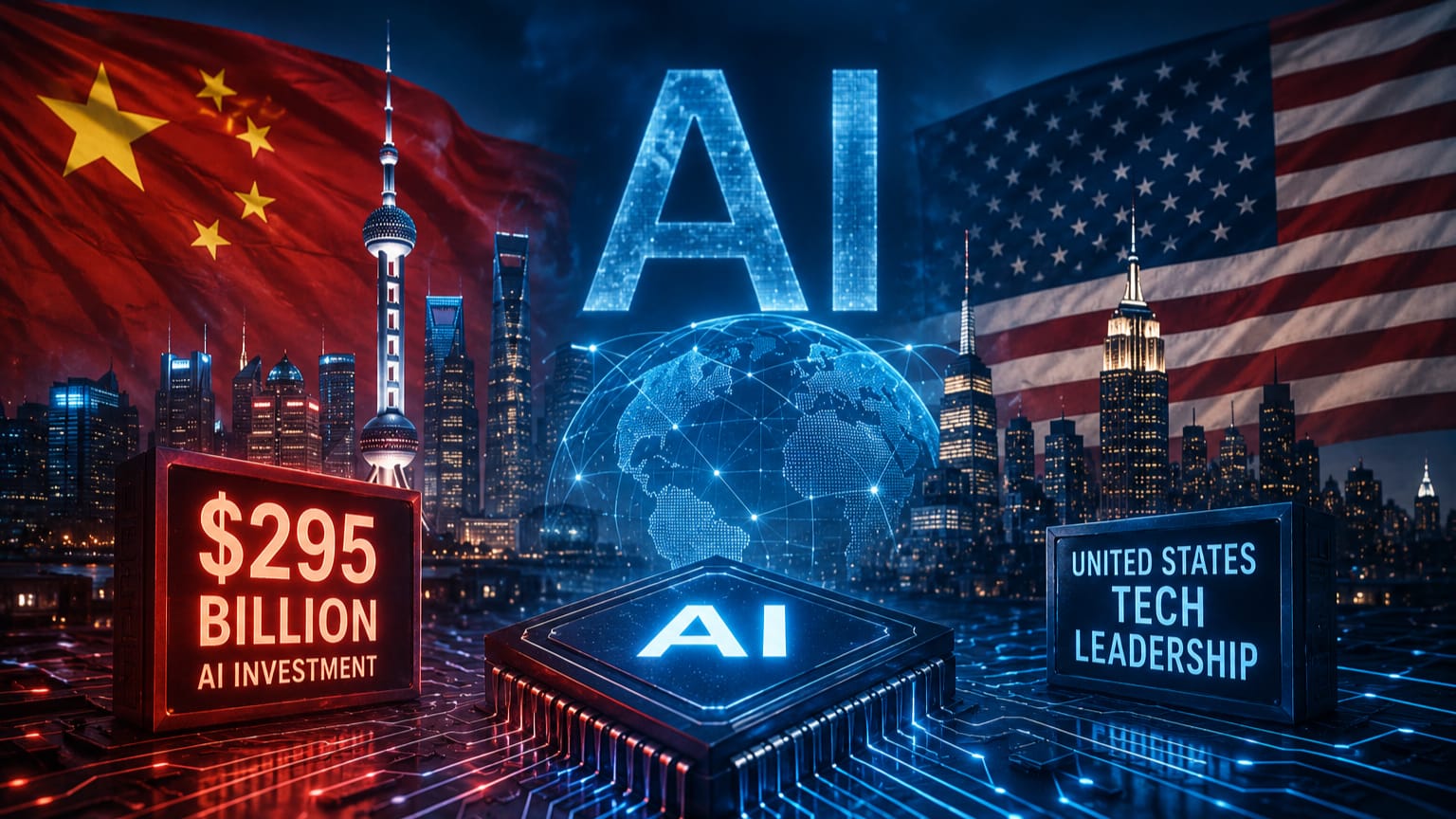
Technology Race Between Global Powers Accelerates
The competition for technological dominance is intensifying as countries invest billions in artificial intelligence, semiconductors, and advanced computing. Governments now see technology not just as an economic driver but also as a strategic asset that could determine future geopolitical influence.
Defense Budgets Rise Worldwide Amid Security Concerns
Governments around the world are increasing military spending as geopolitical uncertainty grows. From advanced missile systems to cyber defense programs, nations are investing heavily in modern warfare capabilities. Analysts believe this trend signals a new era of strategic competition between global powers.
Global Trade Faces New Risks as Conflicts Disrupt Supply Chains
International trade routes are under pressure as geopolitical tensions affect shipping and logistics. Companies are preparing contingency plans to avoid potential disruptions. Experts warn that if conflicts continue to expand, global supply chains could face delays, higher costs, and increased uncertainty.
Power Shift in Asia: Strategic Rivalries Intensify
The Indo-Pacific region is witnessing a rapid strategic transformation as major powers increase military presence and strengthen alliances. Countries across Asia are balancing economic cooperation with security concerns. Analysts say the region could become the most important geopolitical battleground of the decade.
Oil Shock Looms as Middle East Tensions Shake Global Markets
Rising tensions in the Middle East are once again pushing global oil prices upward. Energy traders fear that any disruption to major shipping routes could send fuel costs soaring worldwide. Governments across Europe and Asia are closely monitoring the situation as higher energy prices could quickly trigger inflation and economic instability.